


A Brief Analysis of the Centrifugal Casting Process
Product Category:Industry NewsPrice:Negotiation

A Brief Analysis of the Centrifugal Casting Process
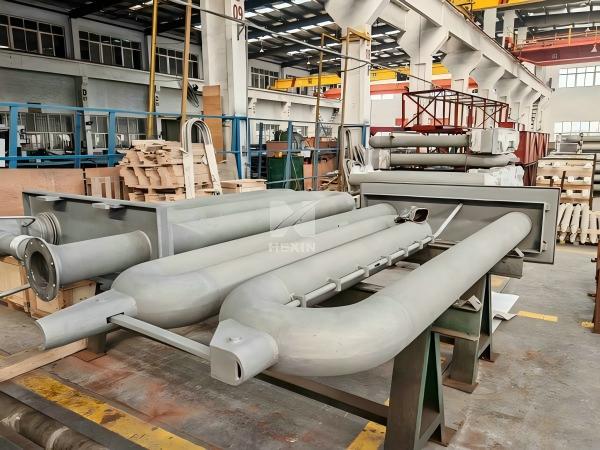
Hexin has many years of experience in producing radiant tubes and furnace rollers, including I-type, U-type, W-type, P-type, and double P-type radiant tubes, as well as hearth rollers, water-cooled rollers, rolls, sinker rollers, and stabilizer rollers. The primary production process for these products is centrifugal casting.
Centrifugal casting was first used to produce cast pipes and has subsequently developed rapidly. Centrifugal casting is used in various industries, including metallurgy, mining, transportation, irrigation and drainage machinery, aviation, defense, and automotive, to produce steel, iron, and non-ferrous carbon alloy castings. Centrifugal cast iron pipes, internal combustion engine cylinder liners, and shaft sleeves are particularly popular. For some forming tools and gear castings, centrifugal casting of the molten shell can also be used, improving both the precision and mechanical properties of the casting.
Because the liquid metal fills and solidifies the mold while rotating during centrifugal casting, centrifugal casting has the following advantages:
1) The liquid metal forms a hollow cylindrical free surface in the mold, allowing hollow castings to be produced without cores, greatly simplifying the production process for sleeves and tubes.
2) Due to the centrifugal force generated by the rotating liquid metal, the centrifugal casting process improves the metal's ability to fill the mold. Therefore, some alloys with poor fluidity and thin-walled castings can be produced using centrifugal casting.
3) The centrifugal force improves shrinkage feeding conditions, allowing gases and non-metallic inclusions to be easily expelled from the liquid metal. As a result, centrifugal castings have a denser structure and are less prone to defects such as shrinkage cavities (porosity), air holes, and inclusions.
4) Metal consumption in the gating system and risers is eliminated or significantly reduced.
5) Castings are prone to segregation, resulting in a rough inner surface. The inner surface dimensions are difficult to control. Given these characteristics, we typically perform selective surface finishing on the inner and outer surfaces of centrifugally cast pipes based on the specific product requirements. We also perform supplementary testing such as air pressure testing and eddy current testing to achieve optimal product performance.